Font Size:
Thinking Big: Garkane Energy Cooperative’s Net-Metering Quiz
By Victoria A. Rocha with NRECA
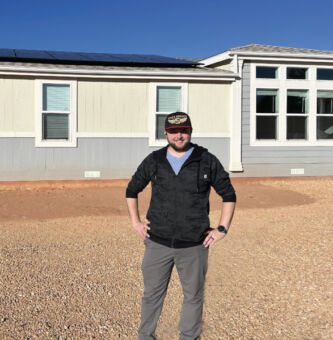
After years of renting, first-time homeowner Matthew Alldredge was looking forward to installing rooftop solar panels on his manufactured home in Kanab, Utah.
But to sell any excess electricity from the system to his power provider, Garkane Energy Cooperative, he would first have to ace an online quiz.
As a longtime fan of solar technology, the 30-year-old restaurant owner had studied photovoltaics extensively, so he understood the co-op’s reasoning behind the requirement.
“It makes sense that they’re making sure we understand our end and that we’re not just getting solar panels willy-nilly,” Matthew says. “There’s a lot more to it than just hooking up panels and going from there.”
About 1/3 of the co-op’s 250 net-metering consumers, including Matthew, have passed the quiz the Loabased co-op began offering in early 2023.
Before proceeding with installation, those interested in rooftop solar must score 100% on the quiz after watching a short educational video.
Garkane launched the initiative to help members identify misleading or incomplete information often given by third-party solar vendors about installation or the technology itself.
“We’ve struggled with solar installers with no ties to the area not understanding Garkane’s process and filling out the application on behalf of the consumer,” says Neal Brown, quiz creator and the co-op’s member services and marketing manager.
There were instances where an installer told a customer they would no longer have an electric bill, and the irate member called the co-op demanding a refund. More egregious cases involve outright fraud.
“The installers would come in, try a quick sell, tell them anything to get a sale, and then they were gone,” Neal says. “It felt like members were holding us responsible for not educating them enough.”
A PDF booklet on the co-op’s website explained the net-metering and solar installation processes, but it wasn’t hitting the mark.
“We definitely had a disconnect between what the solar providers were telling our members and what we expected of the members,” Neal says.
“The problem was with those who would read it and not be interested in solar until maybe a year down the road, and they’d forget everything they read.”
Shining a New Light on Solar Education
Neal teamed up with colleagues in the engineering, metering, and planning units to design a quiz and video program to educate members before they went through the net-metering application process.
The four-minute video explains net metering and other technical aspects of rooftop solar, including interconnection specs. It also states that solar applicants must complete the form themselves and get quotes from reputable, bonded, and insured installers with business licenses from Utah or Arizona.
Even though Matthew had done his own research on photovoltaics, he still learned from Garkane’s educational video.
“The video covered things that are still good to reiterate, especially if you’re very new to solar,” Matthew says.
He appreciated the co-op’s openness and attention to detail.
“They made sure that I got the papers and everything that I needed instead of tossing me back to the installer, he says. “They were right on top of things and made sure I knew what I was getting into.”
Installers have obligations, too. If they want approval for interconnection work in the co-op’s two-state service area, they must watch a separate video and pass a quiz with a perfect score.
The course and quiz are an extra hurdle, Neal says, but the response from homeowners and vendors has been largely positive. By making it a requirement, member complaints have largely disappeared.
“It helped almost force the education when they were ready to do it,” Neal says.
Garkane leaders are considering adding similar online training for other services, such as battery storage, electric vehicles, and new construction.
Neal says overhauling how the co-op communicates with members on solar has helped build trust as a source of technological information.
“It was a way to really educate them and know that they’re getting the information that we need them to have,” Neal says. “By getting them invested in the process, we’re showing that we’re watching out for them.”