Font Size:
Electric Cooperative Youth Tour: The Trip of Thousands of Lifetimes
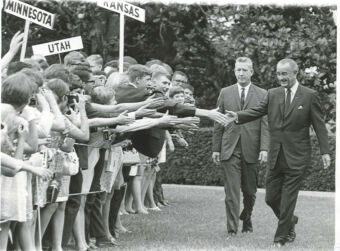
What do Lyndon B. Johnson, Tim Cook, and Jimmy Carter have in common? They’re all connected to an extraordinary program that aims to prepare and power the next generation of cooperative leaders.
Every June since the late 1950s, high school students sponsored by electric cooperatives across the nation have converged upon the nation’s capital for a week they’ll never forget. They’re among the young people participating in the Electric Cooperative Youth Tour.
“They get to experience things they typically wouldn’t have the opportunity to do in rural communities,” Arizona’s Statewide Youth Tour Director Hannah Capozzi says. “It opens their eyes and broadens their horizons to so much of what’s happening in America.”
Years before Johnson became our 36th president, the then-senator energized attendees at the National Rural Electric Cooperative Association’s 1957 annual meeting, urging them to focus on educating their younger neighbors.
“If 1 thing comes out of this meeting, it will be sending youngsters to the national capital where they can actually see what the flag stands for and represents,” Johnson said at the meeting.
A year later, an electric co-op in Iowa took 34 students to Washington with that goal, and other electric co-ops quickly followed suit.
Arizona joined the Washington Youth Tour in 1981, sending 5 students from Sulphur Springs Valley Electric Cooperative (SSVEC). SSVEC remained as a single participating cooperative until Grand Canyon State Electric Cooperative Association Inc. (GCSECA), Arizona’s statewide electric cooperative association, took on the role of facilitating the Youth Tour. In 1999, all GCSECA member electric co-ops and 2 tribal utilities sent 34 students on the Youth Tour.
While the purpose of Youth Tour is to allow teens to see the nation’s capital up close, learn about the political process, and better understand the role they play as citizens, another goal is to interest students in becoming part of the electric co-ops that serve their local communities.
“Sure, we’re electric power cooperatives, so the students mainly think of our role as turning the lights on,” Hannah says. “But there’s so much that goes into making that happen, including exciting career opportunities they might not otherwise have considered.”
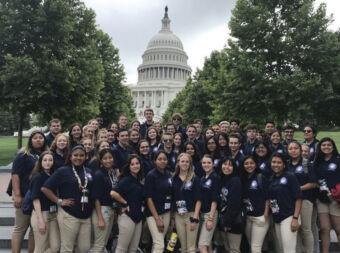
Youth Tour connects nearly 2,000 participants from across the country, but the students don’t pay a penny. The entire cost is funded by local cooperatives, statewide associations, and NRECA, which all recognize the value.
“Arizona’s electric cooperatives know they’re investing in the next generation of co-op members and leaders,” Hannah says. “We’re giving these students a firsthand look at how the co-op business model works before most have zeroed in on a career.”
While visiting D.C., Youth Tour participants see the monuments and memorials that narrate American history. They explore interactive exhibits and displays at the Smithsonian Institution museums, tour historical locations like Mount Vernon and Arlington National Cemetery, and visit other historical and interactive locations. The immersive experience enriches their understanding of our nation’s heritage and ignites a passion for learning. Participants also have an opportunity to meet with Arizona’s congressional leaders.
You might think it would be difficult to get the attention of busy Congressional representatives and other federal officials, but many can’t wait for that week in June.
“We’ve been told by several members of Congress that Youth Tour is their favorite time of year,” GCSECA Youth Tour Co-Director Sylvia Cruz says. “They enjoy hearing from the students about the issues that are impacting their lives and hometowns. The legislators and their staffs go out of their way to make time to see our delegates, because the energy they bring to D.C. is just palpable.”
Nearly 50,000 students from co-op-served communities across America have deepened their understanding of the nation and the roles they can play in shaping it through this vital effort. More than a few have returned to Capitol Hill to serve as congressional aides. A handful have even been elected to House and Senate seats.
Many delegates return home invested in their electric co-ops and become lineworkers, member service representatives, board members and CEOs. Some Youth Tour alumni have earned college scholarships through the Glen English Scholarship Foundation, while others are selected to participate in a Youth Leadership Council program. Other program alumni return to volunteer as adult chaperones, eager to share their own life-changing experiences with the next generation.
“Our goal is to make sure that Youth Tour delegates leave D.C. inspired, ready to go back to their hometown and become the leaders who will create the change their communities need to see,” Hannah says.
Arizona’s 2025 class of 51 students prepares for a trip to D.C., June 14-20. In addition to the students, Arizona is sending 14 chaperones with the group from each co-op.