
Font Size:
Move Over to Protect Roadside Crews
By Scott Flood
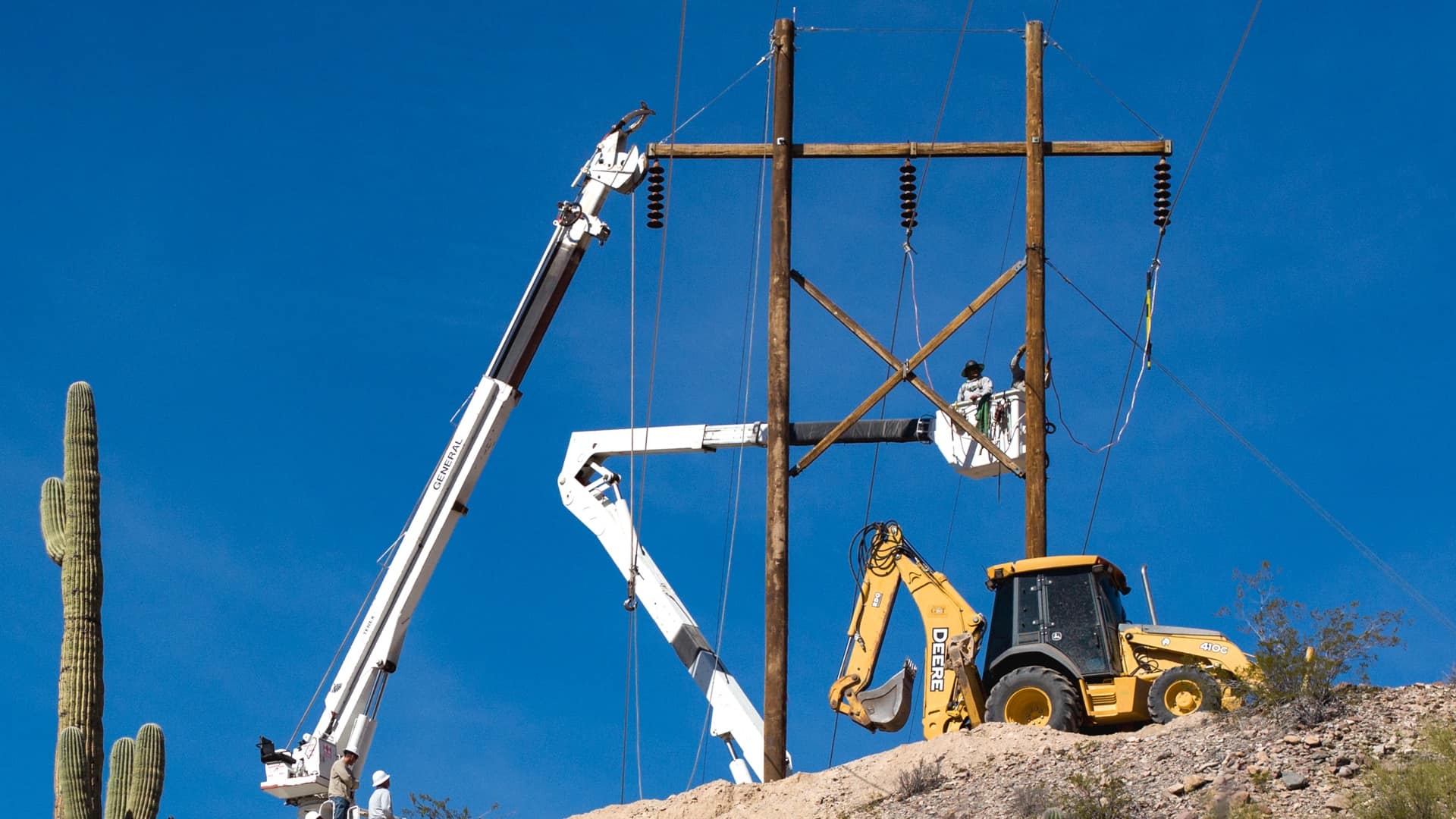
When lineworkers are perched in a bucket truck, repairing power lines along a busy road, they have good reason to be concerned about their safety. Although most lineworkers are less apprehensive about working with high voltages or falling, their biggest worry is also the most unpredictable—a distracted driver hitting their vehicle or a nearby power pole.
The National Safety Council reported that 891 people were killed and 37,701 people were injured in work zone crashes in 2022, the most recent year for which statistics are available. Most of those crashes occur at construction sites, which are usually well-marked.
Electric utility crews are likely to face even greater danger, as they often work alone along remote stretches of roads, frequently in heavy rain or other adverse weather conditions that can make it harder for passing drivers to see them.
The danger of work zone crashes led every state to adopt move-over laws that require drivers to slow their speeds and switch lanes when possible to protect emergency vehicles. The goal is to provide an added safety buffer and minimize the potential for accidents. Drivers caught violating the laws can face penalties, such as significant fines.
Unfortunately, the Journal of Road Safety reports that just 14 states’ move-over laws protect other types of service vehicles, such as construction trucks and utility vehicles. That means drivers in those states are under no legal obligation to give lineworkers that added margin of safety.
Compounding the issue is the dramatic increase in distracted driving. The National Highway Traffic Safety Administration has reported that as many as 1,000 Americans are injured each day because of activities that take drivers’ attention away from the road. The most common is reading and responding to text messages. If a driver traveling at 55 mph glances at their phone for just five seconds, they’ll have traveled the length of a football field before returning their gaze to the road.
The design of today’s vehicles contributes to distractions. Many vehicles have complex controls for entertainment and climate that demand the driver take their eyes off the road to make even simple adjustments.
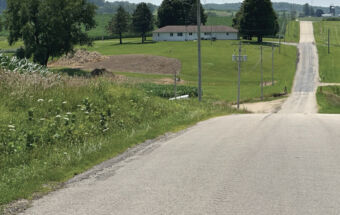
Geography can also be a factor. Electric utilities serving rural and remote areas often have power lines along twisty and hilly roads. Locals accustomed to driving those roads at high speeds may be startled and have little time to react when they encounter a work crew past a hill or around a curve.
Serving some of the most remote parts of Northwest Oregon’s five counties, West Oregon Electric’s power lines stretch along narrow, winding roads.
“Safety should always come first when driving through rural areas where line crews are working,” West Oregon Electric General Manager Billi Kohler says. “Drivers should stay alert, follow posted signs, and respect flagger instructions.
“Giving line crews plenty of space isn’t just courteous— it’s crucial for their safety and yours.”
Besides the potential for lineworker injuries, accidents can also damage or destroy expensive service vehicles, reducing a utility’s ability to respond to outages and other problems. Power poles and other infrastructure may also suffer severe damage.
Additionally, many of the tasks performed by lineworkers, such as reconnecting high-voltage power lines, are inherently dangerous and require their complete focus. When their attention is distracted by speeding or noisy vehicles, they’re more likely to make mistakes that can complicate the repair or cause injury.
Electric utility employees aren’t only at risk when their vehicles are parked and repairs are underway. Lineworkers frequently have to drive slowly along the road’s shoulder to pinpoint broken power lines or failed transformers, especially in darkness or conditions that interfere with visibility.
Many state transportation agencies have work zone awareness programs. Amplifying those efforts by devoting part of a utility’s advertising, publicity and social media to roadside safety reminds drivers of the importance of giving lineworkers a wide berth.
Utilities are considering ways they can modify bucket trucks and other service vehicles to make them more visible.
“WOEC’s trucks are equipped with bright colors, flashing lights, and warning signs,” Billi says. “We use trained flaggers for any planned work along the highway.”
Warning signs and cones are placed in advance of the work zone during emergency outages where flagging crews are unavailable.
Sometimes, a little bit of extra attention is all that’s needed to prevent a serious incident.