
Font Size:
Scaling New Heights
Co-Op Line Crews Brave Treacherous Mountain Peak To Replace Remote Power Lines
By Victoria A. Rocha
The trek to the 6,500-foot summit of the Pedregosa Mountains in Arizona boasts a 1,700-foot elevation gain. It takes at least four hours by foot; fewer if by mule.
But someone tasked with replacing the summit’s aging electric infrastructure are under time constraints because it serves a critical communications load and can’t exactly lug dozens of fiberglass poles, spools of copper wire, and jackhammers by foot or on the backs of mules to the top of a mountain.
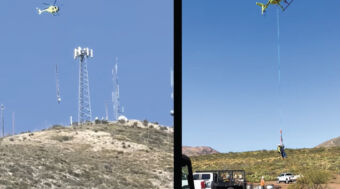
Facing federal requirements to replace the San Bernardino Line’s original copper wire, Sulphur Springs Valley Electric Cooperative, and electric-construction firm National Powerline chartered helicopters to airlift crews and equipment to the work site.
The area was first accessed by the U.S. Army Corps of Engineers nearly 90 years ago as part of the Second New Deal.
“It’s really amazing that when this line was put in place, they needed to use mules to get the materials to the top of the mountain,” says Jorge Garcia, operations manager at Willcox-based SSVEC and a member of the replacement crew.
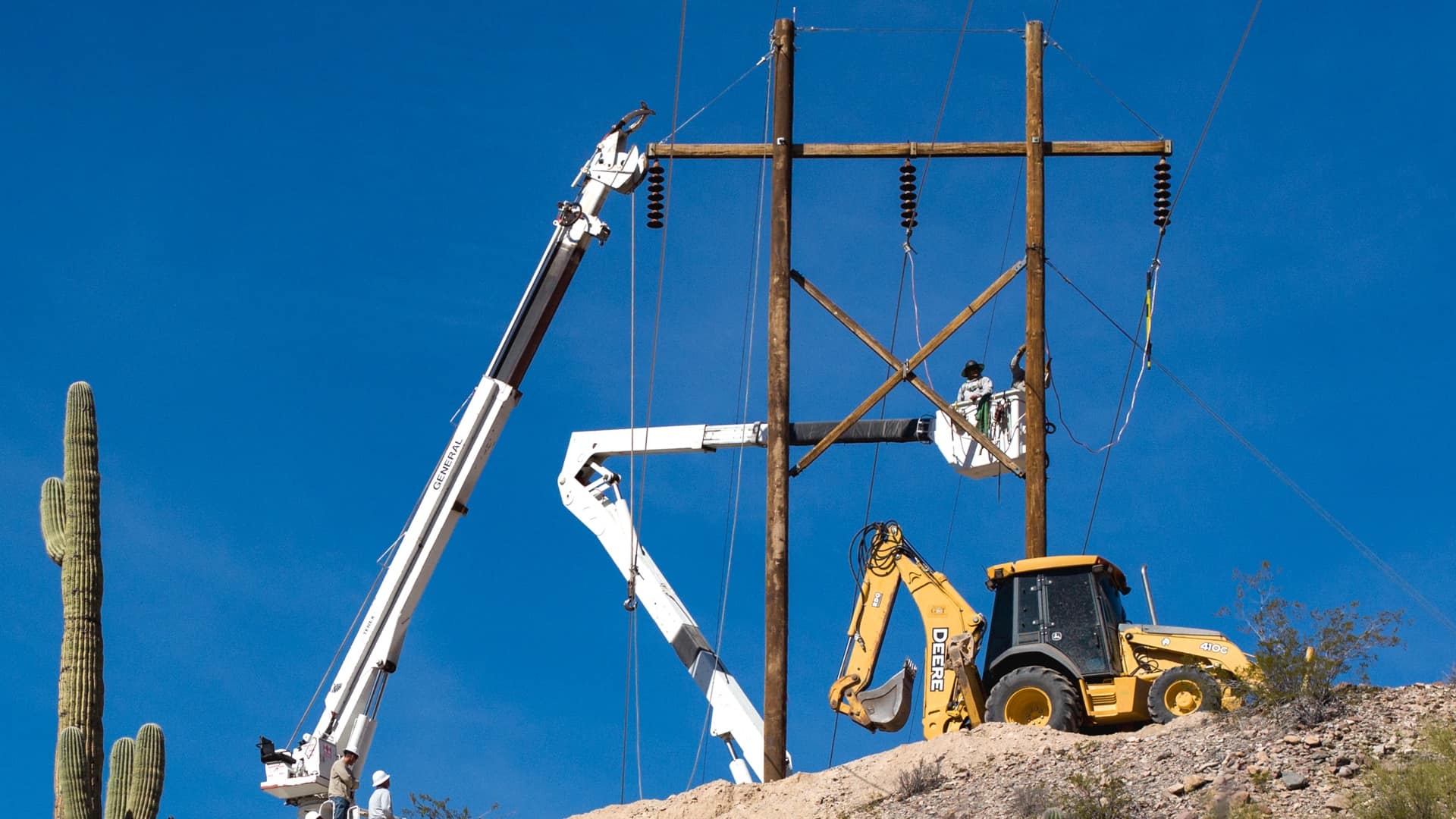
Nowadays, SSVEC lineworkers need to replace the New Deal-era poles and wires atop the Pedregosa Mountains summit.
The three-week job turned into a six-week job because crews needed jackhammers to blast through rock to set the poles.
“They didn’t anticipate as much rock as they encountered, so they flew a compressor up to the top of the mountain so they could power a jackhammer,” says Eric Petermann, SSVEC public relations manager. “Even with the jackhammer, it was hard to dig out the 6-foot holes needed.”
Cochise County Sheriff Mark Dannels appreciated the crews’ extra efforts to get the job done because the area’s public safety system depends on the site’s 2 communications towers and airway beacon.
“We have 1 of the most robust systems in Arizona, providing services to agencies beyond just the sheriff’s department, so it’s vital that we maintain its operation,” Mark says. “Because this is such a remote area, being able to ensure that our deputies and first responders have a strong signal, no matter where they are, is an absolute priority for public safety.”
To get to the work site, lineworkers were connected to a cable hanging out of the helicopter.
“That was a thrill ride,” SSVEC journeyman lineworker Richie Ellis says. “You’re outside the helicopter dangling at the end of a long line, but at least the view was spectacular!”